

Saraki’s Kaiama Reception: A Test of PDP’s Growing Influence in Kwara North
Trove Online Media
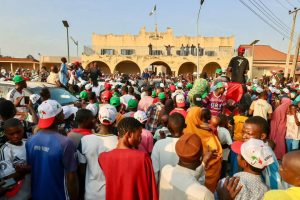
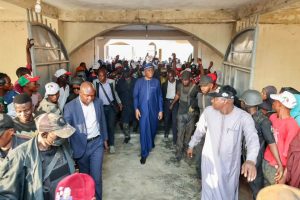
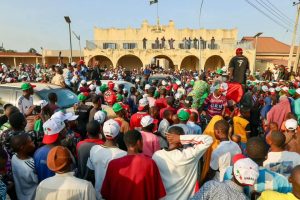
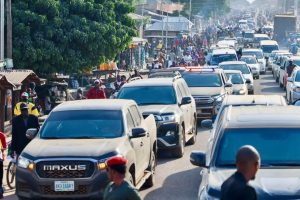 The political train of the Peoples Democratic Party (PDP) appears to be gathering momentum in Kwara North Senatorial District, particularly following the massive turnout that greeted the arrival of former Senate President, Dr Abubakar Bukola Saraki, and his entourage in Kaiama Local Government Area.
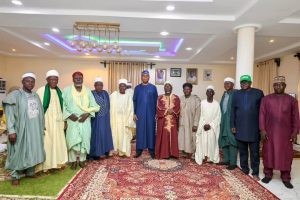
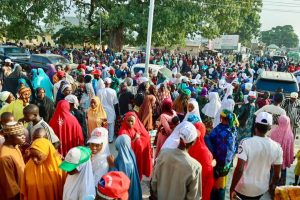 The reception, which attracted traditional rulers, community leaders, political stakeholders and residents, has raised fresh questions about the political strength of the PDP in a district widely regarded as a stronghold of the All Progressives Congress (APC), particularly given that the APC’s 2027 governorship candidate, Rt. Hon. Engr. Salihu Yakubu Danladi, hails from the district.
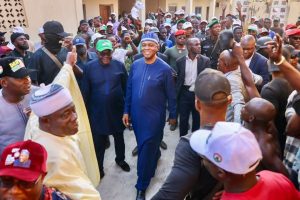 Before Saraki’s visit, there were expectations in some quarters that the reception in Kaiama might not attract a particularly large crowd. However, the turnout appeared to exceed such expectations, with residents and influential community figures reportedly coming out to welcome the former Senate President.
 Beyond the spectacle of the reception, the political significance lies in what it potentially represents: the PDP’s growing ability to attract attention and mobilise support in an area where the APC has traditionally enjoyed considerable political influence.
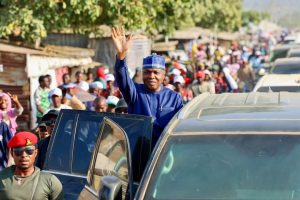 Saraki’s political relevance in Kwara North appears to be receiving renewed attention, particularly against the backdrop of growing political realignments, internal disagreements and grievances among influential political actors with strong connections to Kaiama and the wider senatorial district.
 Some of the prominent political figures whose positions and political calculations could shape the district’s political direction include Sadiq Suleiman Umar, Mohammed Omar Bio, among others.
Their political relevance, alongside emerging alliances and competing interests, could become significant factors in determining how the political landscape of Kwara North unfolds ahead of 2027.
 Kaiama Local Government, with an estimated population of 206,113, represents an important political constituency in the senatorial district. Although population figures do not automatically translate into electoral strength, the political contest between the two dominant parties appears increasingly competitive, with the PDP hoping to expand its influence and possibly secure a larger share of the electorate.
 The bigger question, however, is whether the reception in Kaiama represents an isolated show of political enthusiasm or the beginning of a broader political shift across Kwara North.
 If the PDP can sustain the momentum witnessed in Kaiama and replicate similar mobilisation across other parts of the district, the APC may face a more demanding political contest than anticipated.
 This development also raises questions about the APC’s preparedness to contain the growing opposition, particularly in Kwara Central, where the PDP is also seeking to consolidate its political strength and attract influential political figures who were previously associated with the ruling party.
Attention is equally drawn to the political calculations of key figures associated with the G-15 political bloc, including Yahaya Seriki, Moshood Mustapha, Senator Ibrahim Oloriegbe, Mohammed Dele Belgore
Their individual political positions and level of involvement in the unfolding political realignments could have implications for the APC’s strength across the state. While some of these actors have maintained visible political engagements, Hon. Yinka Aluko has not been as publicly prominent as some of his counterparts.
Nevertheless, their eventual political calculations remain relevant to the broader contest for political dominance in Kwara State.
It is important to emphasise that the purpose of this analysis is not to declare a winner ahead of the 2027 general elections or suggest that a large reception automatically translates into electoral victory.
Rather, it is an examination of the political signals emerging from Kaiama and the growing visibility of the PDP wherever its leadership and political structures engage with the electorate.
Political popularity is not measured by crowd size alone. It must also be tested through party structures, grassroots acceptance, voter commitment, internal cohesion and, ultimately, performance at the ballot box.
For now, Saraki’s reception in Kaiama offers the PDP an opportunity to demonstrate that its political influence is not restricted to its traditional areas of strength.
Whether this momentum can be sustained across Kwara North and beyond remains one of the major political questions that will shape the road to the 2027 general elections.