

Study Confirms ISWAP Presence in Sokoto as U.S. Airstrikes Target ISIS-Linked Cells
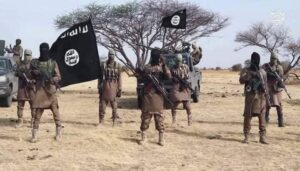 A new study has confirmed that fighters affiliated with the Islamic State West Africa Province (ISWAP), the ISIS franchise in Nigeria, are present and active in Sokoto State, a development that sheds light on recent U.S. airstrikes conducted in the region on Friday.
ISWAP is traditionally concentrated in the North-East and the Lake Chad Basin, raising questions about the group’s widening operational footprint as the U.S. targeted ISIS-linked militants far west of their known stronghold. Sokoto, where the strikes occurred, falls within Nigeria’s North-West geopolitical zone.
According to the study, militants referred to locally as Lakurawa — a Hausa term for fighters believed to have migrated from neighbouring Sahel countries — have infiltrated border communities in Sokoto since late 2017. The group drew notoriety after a wave of violent attacks in late 2023.
Although often profiled as a standalone terror faction, research by James Barnett and Umar Musa, published by the Combating Terrorism Centre (CTC), indicates that early members of the Lakurawa were initially linked to Jama’a Nusrat ul-Islam wa al-Muslimin (JNIM), al-Qaeda’s Sahel affiliate, between 2017 and 2018. The report states that the group has since aligned with the Islamic State Sahel Province (ISSP).
Titled “Kachallas and Kinship: Understanding Jihadi Expansion and Diffusion in Nigeria,” the study assesses the spread and relocation of jihadist networks across Nigeria and the Sahel over the past five years. It provides evidence suggesting ISSP militants operate in Sokoto and northern Kebbi under the Lakurawa identity.
The report also highlights that Nigeria’s most violent bandit groups originate from predominantly Muslim communities in Zamfara, Sokoto, Katsina, and parts of Kaduna, Niger, and Kebbi. As a result, the authors note that Muslim civilians form a significant proportion of both the victims and perpetrators of banditry in the North-West.
The study further suggests that JNIM elements may also be using the Lakurawa cover in Kebbi and Niger States — a tactic researchers believe is intended to obscure organisational identity and complicate intelligence efforts. Citing United Nations experts, the report references active ISSP cells in Sokoto and Kebbi, as well as an ISWAP logistics hub in Sokoto reportedly facilitating cooperation between ISWAP and ISSP.
Researchers observed that Lakurawa fighters deliberately refrain from disclosing factional allegiance to local populations, maintaining ambiguity as an operational advantage.
The U.S. Africa Command (AFRICOM) announced via its official X handle that the Friday airstrike was executed at the request of the Nigerian government. Nigeria’s Ministry of Foreign Affairs spokesperson, Kimiebi Ebienfa, confirmed the request and said additional strikes may follow, noting that the terrorists “continue to pose a threat to the nation’s security.”